 Image: Z thomas, CC BY-SA 3.0
The night Stanislav Petrov did not call
Shortly after midnight on 26 September 1983, in a bunker at Serpukhov-15 south of Moscow, a screen that normally showed nothing began to show a missile launch from the United States. Lieutenant Colonel Stanislav Petrov (1939 to 2017), the duty officer that night at the command centre of the Soviet Union's early warning satellites, had a few minutes to decide what to tell his superiors. The system reported one launch, then a second, then three more, five intercontinental ballistic missiles in all, and raised its own assessment to the highest level of confidence. Petrov reported a malfunction. He was right, and the reason he gave for his judgement is the subject of this post, because the question he faced is about to be faced by machines.
What the satellites saw
The system was called Oko, the eye. It consisted of satellites in highly elliptical orbits carrying infrared telescopes that watched the edge of the Earth for the heat of a rocket plume rising above the horizon. Watching the edge rather than the ground was meant to keep the sensors from being confused by reflections from the surface. On the night in question, as later investigation found, the geometry of satellite, sun, and Earth put the sun's reflection off high-altitude clouds over the northern United States, where the US missile fields are, directly in the telescope's view. The computers read the glint as five rocket plumes.
Petrov said afterwards, in interviews given after the episode became public in 1998, that two things made him doubt the screen. The first was that an American first strike would be launched with hundreds of missiles at once, so as to destroy Soviet forces before they could fire back; five missiles made no sense as a strategy. The second was that the ground radars, which could see a missile only once it rose above their horizon about ten minutes after launch, reported nothing. He had been trained, he said, to report what the system reported, and the system was telling him with the highest confidence that the attack was real. He reported a false alarm instead, and then waited to see whether the radars would prove him wrong.
Why the context made it worse
The month matters. On 1 September 1983 a Soviet interceptor had shot down Korean Air Lines flight 007, which had strayed into Soviet airspace over Sakhalin, killing 269 people, and relations between the two superpowers were at their lowest point since the Cuban Missile Crisis. The Soviet leadership under Yuri Andropov believed that the United States under Ronald Reagan might be preparing a first strike, and had instructed its intelligence services to look for the signs. In November, NATO's command exercise Able Archer 83 rehearsed the procedures for a nuclear release realistically enough that some Soviet units were placed on alert. Petrov's judgement was made inside that atmosphere, by an officer who knew what his superiors feared.
Whether his report would have started a war if it had gone the other way is not knowable. The Soviet Union, like the United States, had a policy under which a confirmed attack warning could lead to launching its own missiles before the incoming warheads arrived, so that the missiles would not be destroyed in their silos. The field calls this launch on warning, and it rests on the warning being right. The Soviet procedure required confirmation by the ground radars and a decision by the political leadership, so Petrov's report was one input and probably not the decisive one. He never claimed otherwise. What he did claim, and the record supports, is that the system he was operating said attack with full confidence and that a human being with ten minutes and a reason to doubt said otherwise.
The other false alarms
The Soviet case is the famous one because the decision rested on a single named officer, but the American record of the same years is comparable, and it is better documented, because the National Security Archive has obtained the internal reviews. On 9 November 1979 a training tape simulating a full Soviet attack was fed by mistake into the live computer at the North American Aerospace Defense Command, and for several minutes the displays at three command centres showed a massive attack under way; interceptors were scrambled before the raw radar data showed nothing. On 3 June 1980, and again three days later, a failed chip costing less than a dollar in a communications computer caused displays to show first 2 and then 200 incoming missiles; bomber crews started their engines. On 25 January 1995 a Norwegian and American scientific rocket launched from Andøya, to study the aurora, was tracked by Russian radars as a possible Trident missile fired from a submarine, and Boris Yeltsin was handed the nuclear briefcase for the first time in the post-Soviet era. Norway had notified Russia of the launch weeks earlier, and the notification had not reached the radar crews.
In each case the system worked in the end because somebody waited for a second source, and because the procedures gave them time to wait. That is the argument that has made Petrov's night a reference point in a debate he never took part in.
Early warning and the machine
Petrov's reasoning had three steps. He knew what an attack ought to look like, he noticed that the pattern on his screen did not fit it, and he weighed the silence of a second sensor more heavily than the confidence of the first. Each step is the kind of thing that proposals to automate early warning and nuclear command promise to do faster. A machine learning system trained on the plumes of every rocket launch since 1957 would classify a plume with a confidence of its own, and it would do so in seconds. The question Unit 14 of the masterclass puts to the reader is whether such a system would have had any way to be puzzled by the number five.
Scholars of the problem have drawn two lines. The first is the one between the sensors and the decision: automating the detection and tracking of missiles, which the United States and Russia have done for decades, is a different thing from automating the decision to launch, and the US government has stated in its nuclear posture documents that a human will remain in the loop for any decision to employ nuclear weapons. In November 2024 the leaders of the United States and China publicly affirmed the same principle together. The second line is less comfortable. A commander who receives a machine's assessment with a stated confidence of 99 per cent, within a procedure that leaves eight minutes, is still formally in the loop, but the room for the kind of doubt Petrov exercised has shrunk. The Soviet Union's own answer, a system called Perimeter and nicknamed the Dead Hand in the West, which could pass launch authority to duty officers in a bunker if the leadership was destroyed, is a reminder that the pressure to remove the human comes from the fear of losing the retaliatory force, which is the same fear that drove launch on warning in the first place.
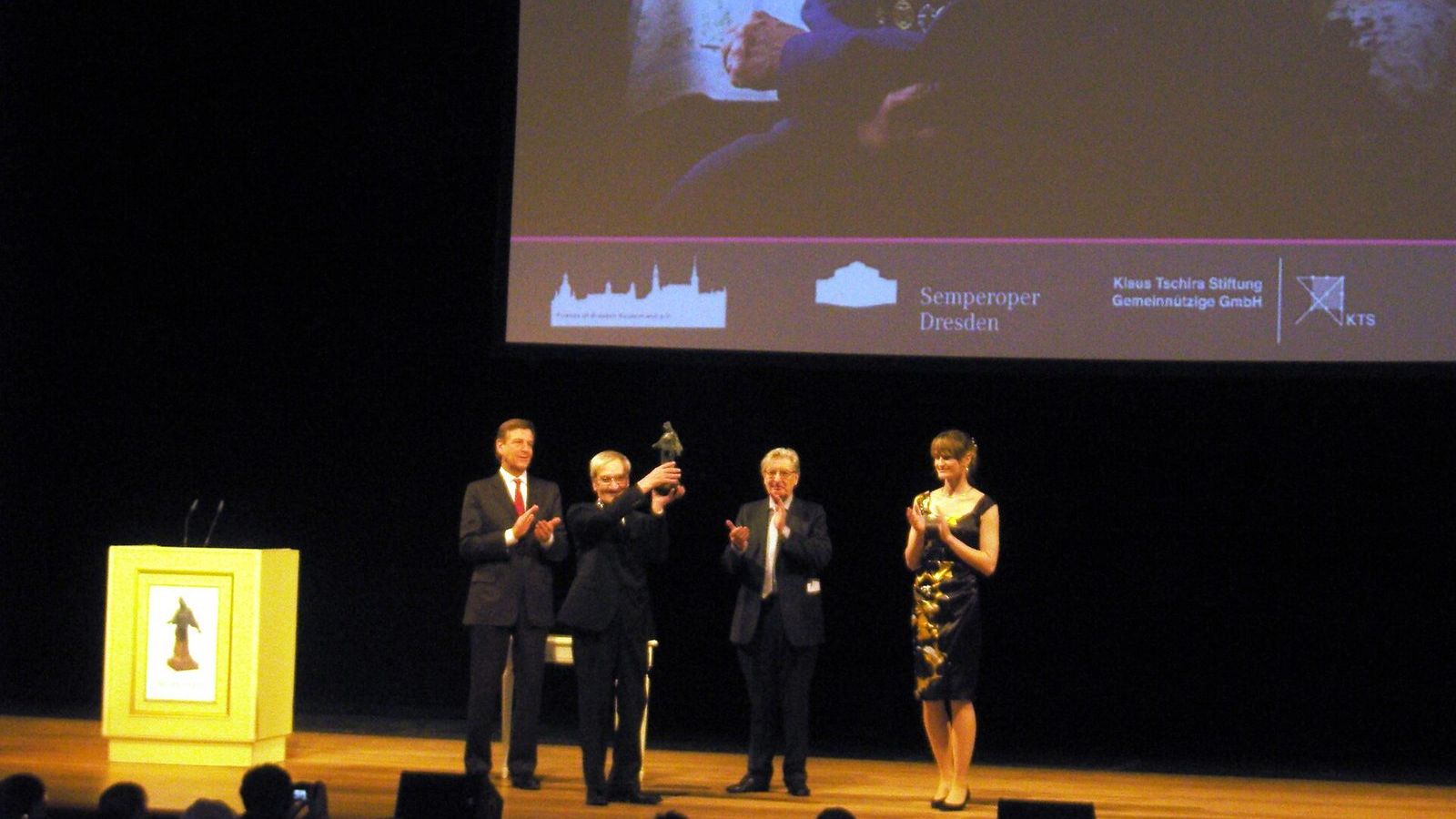
Petrov was reprimanded for the state of his logbook and left the service the following year. The episode became public in 1998 through the memoirs of his former commander, and in 2013 he received the Dresden Prize in Germany; he died in May 2017 in Fryazino, near Moscow, and his death became known only months later. The masterclass tells the story twice. Unit 9, on nuclear weapons and deterrence, places it within the logic of launch on warning and the arithmetic of a surviving force. Unit 14, on artificial intelligence and autonomous weapons, asks what a system that replaced him would need to know, and whether anyone can specify it.