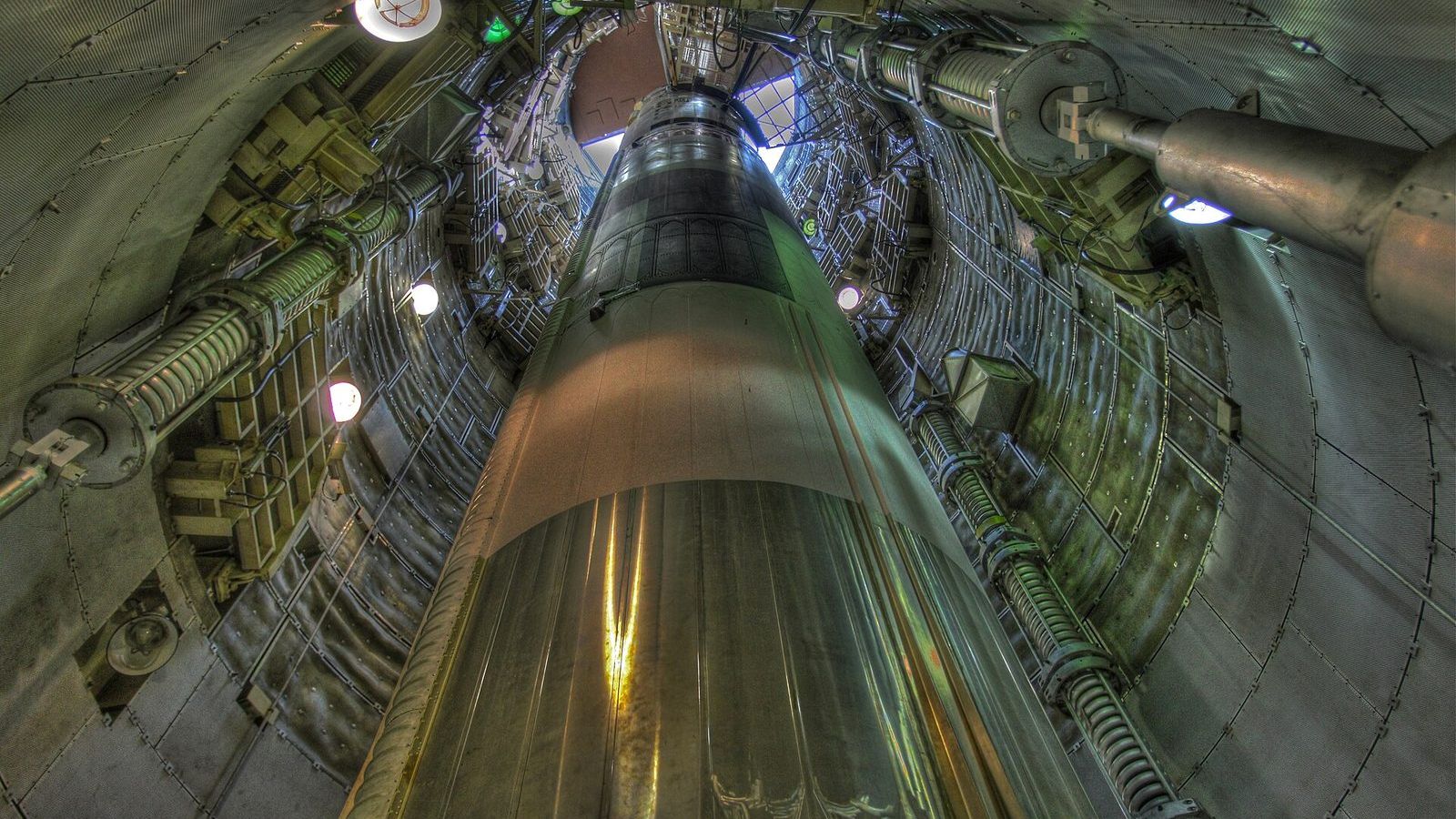
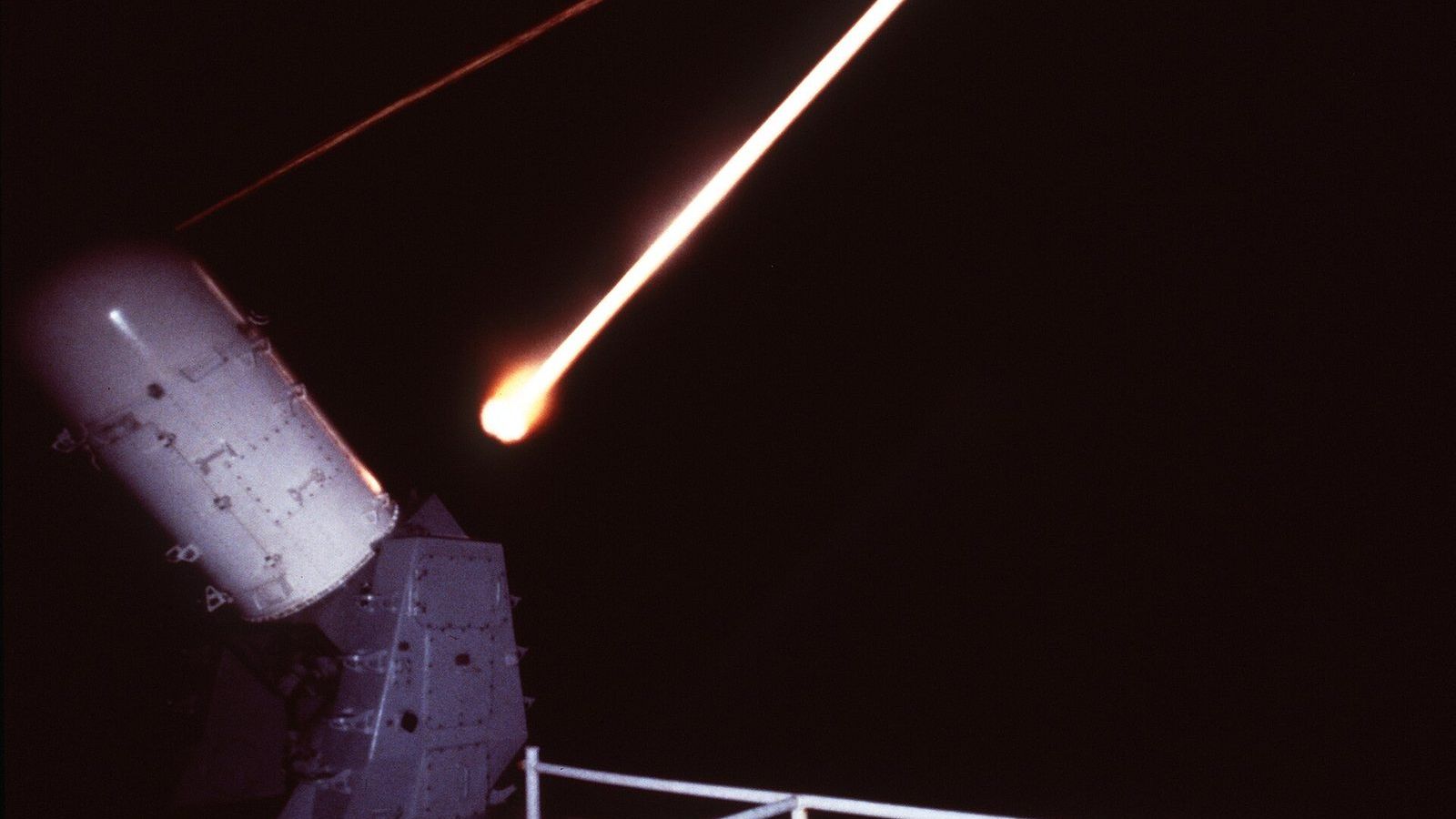
 Image: US Navy, PH2 Dale W. Novotasky, public domain
What an autonomous weapon actually is
The United States Navy has operated a weapon since 1980 that detects an incoming missile, decides that it is a threat, aims, and fires without a human being in the loop. It is the Phalanx close-in weapon system, a radar-guided 20 millimetre gun that sits on most of the Navy's ships, and in its automatic mode it does all of that in the few seconds it has before a sea-skimming missile arrives. Nobody campaigns against it. The campaign that has run since 2013 under the name Stop Killer Robots, and the diplomatic negotiations that have run in Geneva since 2014, are about something else, and the first difficulty of the subject is saying what. Unit 14 of the masterclass spends a section on the definition because almost every disagreement about autonomous weapons turns out to be a disagreement about which weapons the word covers.
The spectrum
Set the Phalanx at one end. It is autonomous in its critical functions, but it is fixed to a ship, it fires only at objects approaching the ship at missile speed, its engagement lasts seconds, and the humans who switched it on know exactly what it will attack. Israel's Iron Dome interceptors and the Patriot missile batteries used by a dozen armies work on the same logic, and the land mine, which attacks whatever steps on it, is the oldest member of the family. Now move along the line. The Harpy, a drone built in Israel in the 1990s, is launched towards an area, flies a search pattern for hours, detects the emissions of air defence radars, and dives into whichever radar it finds; the human chose the area and the kind of target, and the machine chose the radar. Further along are the loitering munitions used in large numbers in the wars of the 2020s, which can be flown by an operator or left to find a target of a programmed type when the radio link is jammed. In March 2021 a United Nations panel of experts reported that retreating fighters in Libya had been hunted down by a Turkish-made loitering munition programmed to attack without a data link, the first such report in an official document; whether the weapon killed anyone and whether a human had cleared the engagement are not established.
Beyond that are systems that do not yet exist in the field: a weapon that selects human targets by its own criteria over a wide area and a long time, or a weapon whose targeting rules are learned from data in ways its operators cannot inspect. The public argument is usually about this end of the line. The diplomatic argument is about where on the line to draw the rules.
Two working definitions
The International Committee of the Red Cross, whose position has shaped the negotiations, defines an autonomous weapon system as any weapon that selects and applies force to targets without human intervention: after activation by a person, the system itself picks the object to attack and attacks it, on the basis of a target profile and the information its sensors gather. The weapon is autonomous in its critical functions, the selecting and the attacking, whatever else a human did before. Under this definition the Phalanx qualifies, which is the point: the ICRC does not want to ban it, but it wants the rules to start from the fact that autonomy in targeting already exists.
The United States Department of Defense's Directive 3000.09, first issued in 2012 and reissued in January 2023, uses almost the same words: an autonomous weapon system, once activated, can select and engage targets without further intervention by a human operator. It then requires that such systems be designed to allow commanders and operators to exercise appropriate levels of human judgement over the use of force, and sets a review procedure for approving new ones. The phrase "appropriate levels of human judgement" was chosen in preference to "human control" after a long argument, because judgement can be exercised before the weapon is activated, in setting what it may attack and for how long, while control suggests a finger on every trigger. Michael Horowitz, whose research on the subject the masterclass presents, worked on the 2023 revision inside the department. Critics of the directive point out that the review procedure has been used rarely and that what counts as appropriate is decided by the department itself.
What states have agreed since 2017
The negotiations take place under the Convention on Certain Conventional Weapons, a treaty of 1980 under which states have previously restricted blinding lasers and incendiary weapons. After informal meetings from 2014 to 2016, the states parties set up a Group of Governmental Experts in 2017, and in 2019 the group agreed eleven guiding principles. The principles say that international humanitarian law applies fully to any weapon system, that human responsibility for decisions on the use of weapons must be retained because accountability cannot be transferred to machines, that human-machine interaction must ensure that the use of force complies with the law, and that risk assessment and mitigation should be part of the design of any new system. They did not define the weapons, did not prohibit anything, and did not require anything that was not already law.
Since then the group has worked towards what most delegations call a two-tier approach: a prohibition on systems that cannot be used in compliance with the law of armed conflict, which in most proposals means systems whose effects cannot be predicted and systems designed to target people directly, and regulations on everything else, covering limits on the time and area of operation, the types of target, and the training of operators. The ICRC and the Secretary-General of the United Nations called jointly in October 2023 for a treaty on those lines to be concluded by 2026, and the group's current mandate runs to the end of that year. The convention works by consensus, which means that any one state can block a text, and several of the states with the most advanced programmes have said that a new instrument is premature. The question has therefore also gone to the General Assembly, where consensus is not required. Resolution 78/241 of 22 December 2023, the Assembly's first on the subject, was adopted by 152 votes to 4 with 11 abstentions and asked the Secretary-General to collect the views of states. A second resolution in December 2024 was adopted by 166 votes to 3 and set up informal consultations in New York alongside the Geneva process. The Assembly's votes do not make law, but a vote of 166 to 3 is the kind of count that, in the history of other weapons, has come a few years before a treaty.
What the word is doing
The reason the definition matters is that each side of the debate chooses the end of the spectrum that helps it. An advocate of a ban describes a machine choosing to kill a person; an opponent describes the Phalanx and asks whether the advocate proposes to leave ships defenceless. The useful questions are the ones that apply across the line. For how long, and over how large an area, does the weapon operate after a human last made a decision? What kind of thing is it allowed to attack, and how is that kind recognized? Can the person who activated it predict what it will do, and can anyone afterwards explain what it did? Asked of the Phalanx the answers are seconds, metres, missiles, and yes. Asked of a loitering munition left to hunt for armoured vehicles across a province for an afternoon, the answers are the subject of the negotiations. Unit 14 of the masterclass, on artificial intelligence and autonomous weapons, puts these questions to five real systems in turn, and Unit 16, on governing emerging technologies, asks whether the path that chemical weapons and landmines took to a treaty is open to a technology that most armies are buying.