 Image: Steve Jurvetson, CC BY 2.0
How many nuclear weapons are there?
At the start of 2026 the world held about 12,200 nuclear warheads, by the estimate the Federation of American Scientists publishes each year. The exact figure in the table was 12,187, down from 12,241 a year earlier, and the total has fallen almost every year since 1986, when it peaked at about 70,300. Those two sentences carry three claims that deserve a closer look: that somebody can count weapons that no inspector has ever been allowed to see, that the count is falling, and that the fall tells you something about the danger. The first is largely true, the second is true but misleading, and the third is the question Unit 9 of the masterclass asks the reader to think about.
The estimate, state by state
The Status of World Nuclear Forces, maintained by Hans Kristensen and his colleagues at the Federation of American Scientists, is the figure that the news, the Stockholm International Peace Research Institute's yearbook, and most governments' own briefings rely on. Its table at the start of 2025 gave Russia about 5,459 warheads and the United States about 5,177, which between them is about 86 per cent of the total. China followed with about 600, France with 290, the United Kingdom with 225, India with about 180, Pakistan with about 170, Israel with about 90, and North Korea with about 50. Nine states, and no tenth since North Korea's first test in October 2006.
The total hides a distinction that matters more than the total does. Of the 12,200 or so warheads, about 9,600 were in military stockpiles, available for use by the armed forces. The remaining 2,500 or so were retired weapons awaiting dismantlement, nearly all of them American and Russian, which still count as warheads because the fissile material is intact but which are not on any delivery system. Of the military stockpile, about 3,900 warheads were deployed, meaning mounted on missiles or stored at bases with operational bombers, and of those about 2,100 were on high alert, ready to be launched within minutes. The fall in the total since 1986 is almost entirely a fall in the retired and reserve categories. The number of deployed strategic warheads has been roughly flat for fifteen years, and the number held by states other than the United States and Russia is rising.
How anyone knows
No international inspector has ever counted a warhead in a Russian or American depot. The estimates rest on several kinds of evidence that are each incomplete and that are checked against each other.
The first is what the states themselves declare. Under the 2010 New START treaty the United States and Russia exchanged detailed data every six months on their deployed strategic launchers and the warheads counted on them, and the United States published the aggregate figures. Russia suspended its participation in February 2023, the exchanges stopped, and the treaty itself expired on 5 February 2026, so this source has gone dark for the two largest arsenals. The United States has also declassified its total stockpile at intervals; in 2010 it announced 5,113 warheads as of September 2009, and later releases brought the series up to 3,748 as of September 2023. Britain has stated a ceiling, which it raised in 2021 to no more than 260 warheads, and France has stated that it holds fewer than 300.
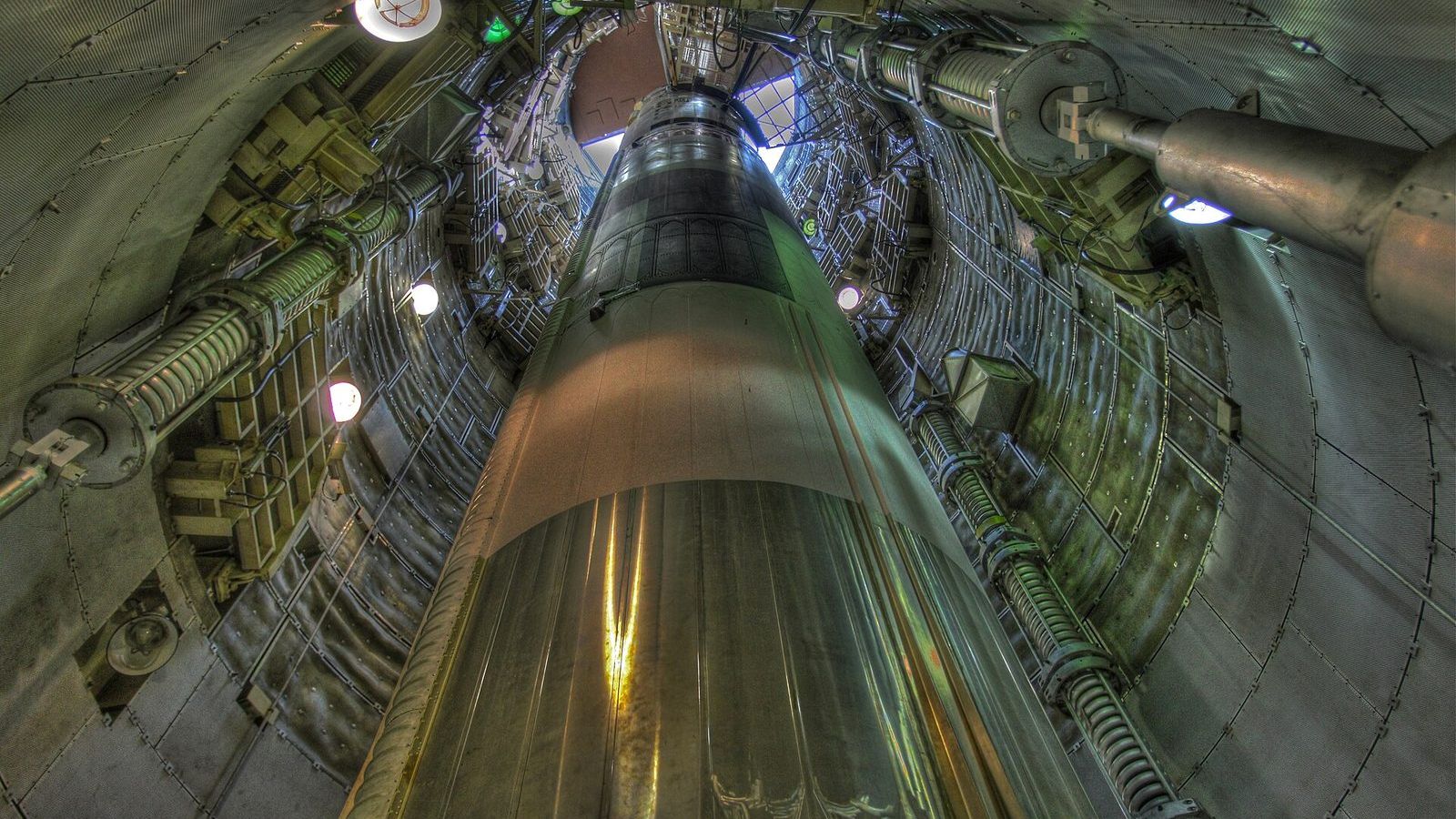
The second is the delivery systems, which are large and hard to hide. A missile silo is a concrete structure visible from orbit, a ballistic missile submarine has a known number of launch tubes, and a bomber base has a known number of aircraft. Commercial satellite imagery has made this kind of counting public. In 2021 researchers at the Federation of American Scientists and at the Middlebury Institute of International Studies identified, on images anyone could buy, about 300 new missile silos under construction in three fields in western China, which is the main reason the estimate for China has risen from about 350 to about 600 in four years. The US Department of Defense's annual report on China gave a similar figure and projected more than 1,000 by 2030.
The third is the fissile material. A warhead needs a few kilograms of plutonium or a few tens of kilograms of highly enriched uranium, and the production history of each state's reactors and enrichment plants, known from declarations, inspections where they apply, and the plants' own physical limits, puts a ceiling on how many warheads it could have built. The International Panel on Fissile Materials publishes these ceilings. For India, Pakistan, Israel, and North Korea, which have never declared anything, the estimates are built mainly from this source and from the missiles observed, and the uncertainty is correspondingly wide: North Korea's figure of about 50 means somewhere between 40 and 60 assembled weapons, with enough material for perhaps 90.
The peak and the fall
The 1986 peak of about 70,300 warheads was mostly a Soviet number; the Soviet stockpile is estimated to have reached about 40,000 that year, the American one having peaked earlier, at about 31,000 in 1967. The fall since then came in two kinds of step. Treaties removed whole categories of weapons, as the 1987 Intermediate-Range Nuclear Forces Treaty did for ground-launched missiles with ranges from 500 to 5,500 kilometres, and the unilateral withdrawals of 1991, announced by George H. W. Bush and matched by Mikhail Gorbachev, removed most of the short-range weapons from ships and army units. The rest of the fall is the slow dismantlement of weapons retired decades ago, at a rate of a few hundred a year, which is why the total still declines while the deployed force does not.
What the falling line does not show is the money and the modernization. Every one of the nine states is replacing or upgrading its delivery systems, and several are enlarging their stockpiles. The United States is building a new intercontinental missile, a new submarine, a new bomber, and a new cruise missile at the same time, at a cost its Congressional Budget Office put at about 946 billion dollars over the decade from 2025. Russia has deployed new missile types and tested others. China is on the steepest curve of any. Pakistan and India add warheads each year. The count is lower than at any time since the late 1950s, and the number of states modernizing is higher than at any time since the 1960s.
Reading the number
A student who meets the figure of 12,200 in an exam or a Model United Nations position paper should carry three things with it. The source and date, because the number changes every January and because different sources count different things; SIPRI's yearbook, drawing on the same team, gives figures that differ slightly because of its cut-off date. The category, because 12,200 total warheads and 3,900 deployed warheads describe different dangers. And the share, because two states holding 86 per cent of the weapons is the reason bilateral arms control between them has mattered so much, and the reason the end of New START without a successor is the arms control event of the decade. Unit 9 of the masterclass, on nuclear weapons and deterrence, takes the reader from these counts to the arithmetic of a surviving force, which is what the counts are for.