 Image: David Castor, CC0
How many wars are there, and who is counting?
In June 2025 the Uppsala Conflict Data Program reported that 2024 had seen 61 armed conflicts in which a state was a party, the highest number since its records begin in 1946. Around the same time, other articles were reminding readers that war between states had become rare and that a person's chance of dying in battle was far lower than it had been for most of the twentieth century. The two claims come from the same data. The difference lies in what is being counted, and the first thing a student of international relations learns is to ask that question before quoting any figure.
Two projects, two thresholds
The oldest systematic count is the Correlates of War project, begun by J. David Singer at the University of Michigan in 1963. Its definition of a war, set out by Singer and Melvin Small in 1972, is sustained combat between organized armed forces that causes at least 1,000 battle deaths. For a war between states, each side has to be a recognized state and to have committed a minimum force. The project's war lists run from 1816 and distinguish interstate wars, wars between a state and a non-state group outside its borders, and civil wars.
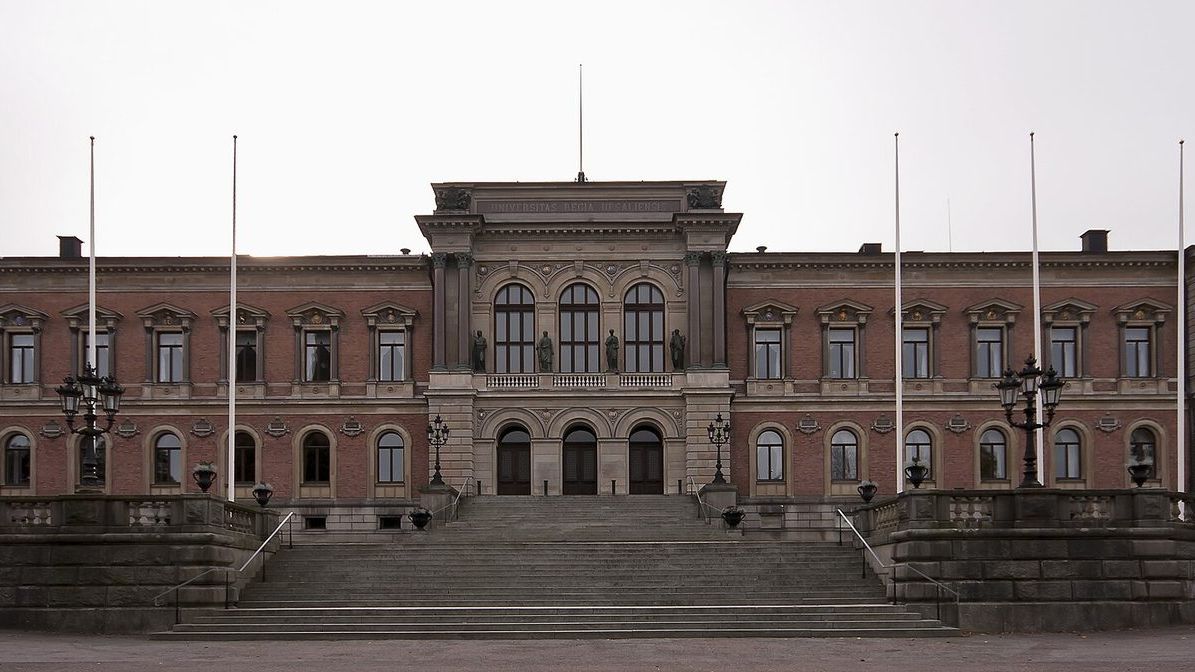
The Uppsala Conflict Data Program, at Uppsala University in Sweden, has become the field's main source for the years since 1946 and, for deaths, since 1989. Its unit of counting is a contested incompatibility, over government or over territory, between two parties of which at least one is the government of a state, with the use of armed force producing at least 25 battle-related deaths in a calendar year. That is an armed conflict. A conflict that causes at least 1,000 battle-related deaths in a calendar year is a war for that year. The same conflict can be a war one year and a minor conflict the next, and the dataset records it year by year.
Uppsala also counts two kinds of violence that involve no government as a party: non-state conflict, between two organized groups, and one-sided violence, the deliberate killing of civilians by a government or a group. The Rwandan genocide of 1994 is recorded mostly as one-sided violence, which is why 1994 does not appear as a peak in charts of battle-related deaths although it was among the deadliest years since 1945.
Why the headlines disagree
The figure of 61 conflicts counts every state-based conflict that crossed the 25-death line in 2024. Many of them are small, and several are conflicts the same government fights against different groups, each counted separately because each is a different incompatibility. A newspaper that reports the number of wars in the world may instead be counting the conflicts above the 1,000-death line, which is a much shorter list, or may be using the figures of another organization altogether. The Armed Conflict Location and Event Data project, for example, counts events of political violence, including riots and attacks on civilians, and reports the number of countries with high levels of such events, which produces a different number again. None of these counts is wrong. They are answers to different questions.
Battle deaths tell a different story from the number of conflicts. Uppsala's best estimates show deaths in state-based conflict falling from the Cold War decades to a low point in the years around 2005, rising with the Syrian war after 2011, and jumping again in 2022, when the wars in Ethiopia and Ukraine pushed the total above 200,000, the highest since the mid-1990s. Measured against a world population that has more than tripled since 1950, the rate of death in battle in the 2000s was among the lowest in the record. Both the rise since 2011 and the long fall before it are in the same table.
The hardest number to pin down is deaths. Uppsala publishes a low, a best, and a high estimate for every conflict year, built from news reports, official statements, and the reports of international organizations, and the gap between low and high can be wide for a war fought in places journalists cannot reach. A figure quoted without saying whether it is a documented count, a demographic estimate, or a government claim is a figure without a meaning, and the units of the masterclass give the method with every casualty number they use.
A conflict traced through the criteria
The way to understand a definition is to apply it. Take any conflict in Uppsala's online encyclopedia and read its entry. The parties are listed, with the government on one side and the organized group or the other state on the other. The incompatibility is stated: government, meaning the group wants to replace or change the regime, or territory, meaning it wants independence or a change of border. Then come the deaths by year, with the three estimates. In some years the best estimate sits below 25 and the conflict is marked inactive; in others it crosses 1,000 and the year is a war year. A reader who has done this once with a conflict in the news will never again hear "the number of wars has doubled" without asking which line was crossed.
The habit of counting has a history worth knowing. Lewis Fry Richardson, a Quaker meteorologist, spent the last decades of his life collecting every deadly quarrel he could find between 1820 and 1949, and found that their sizes followed a regular statistical law, with many small ones and very few large ones. Quincy Wright at the University of Chicago published A Study of War in 1942, with lists reaching back to 1480. Singer's project of 1963 turned that tradition into a dataset with explicit rules, and Uppsala's program, founded in the 1970s and publishing its yearly figures since the 1980s, made the rules public and the counting continuous.
What the numbers are for
A count is only the beginning. The thresholds exist so that scholars can ask whether democracies fight each other, whether trade reduces war, whether peacekeeping shortens it, and whether the long fall in interstate war since 1945 is a trend or a run of luck, and can answer with evidence rather than impressions. Every one of those questions is answered with one of these two datasets, and every answer depends on the definition. Unit 1 of the masterclass introduces both projects and their thresholds as part of the field's toolkit, Unit 6 uses them to ask why wars happen at all, and Unit 12 uses the Uppsala categories to show that most wars since 1945 have been fought inside states rather than between them. The curriculum shows the order.