
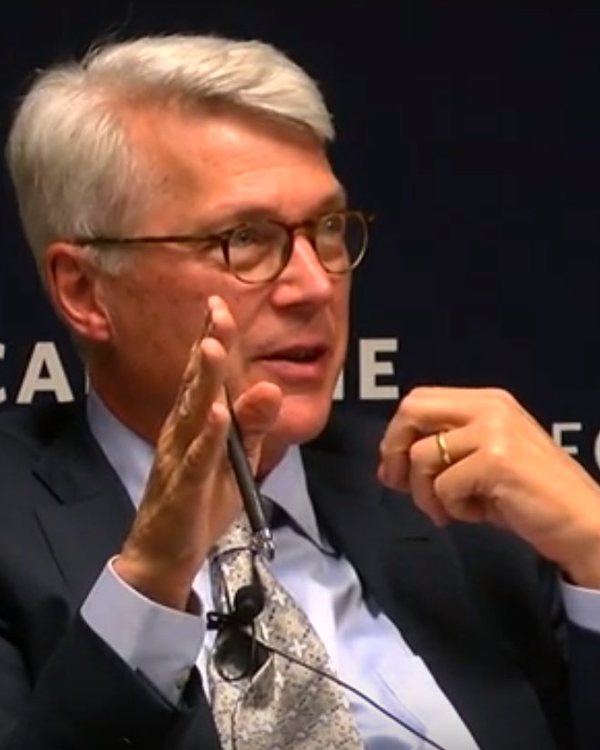
Photo: Carnegie Live, CC BY-SA 3.0, Wikimedia Commons
Scott D. Sagan
Stanford University
- Research field
- Nuclear weapons policy, command and control, proliferation, and the ethics of nuclear use
Scott Sagan has studied for four decades how nuclear weapons are controlled, why states acquire them, and what restrains their use. With Daryl Press and Benjamin Valentino he tested whether the American public holds a nuclear taboo, with a survey experiment in which respondents chose between a nuclear and a conventional strike of equal effect and then of unequal effect. They found an aversion that is real but weak: 19 per cent preferred the nuclear strike when it offered no advantage, 69 per cent when it was twice as effective, and the main reason for rejecting it was the fear of setting a precedent rather than its immorality. The unit presents the result as the authors state it, next to Tannenwald's archival evidence of a taboo among decision makers, and names Sagan's organizational argument from his debate with Kenneth Waltz in the text.
In the masterclass
The spotlight sits in Section 5, on the non-use of nuclear weapons since 1945, after the Key Concept on the nuclear taboo, and the worked case that follows reads its figures.
The research is presented in Unit 9: Nuclear Weapons and Deterrence, in a research spotlight box that explains the result at the level of the unit and links it to what you have just learned.